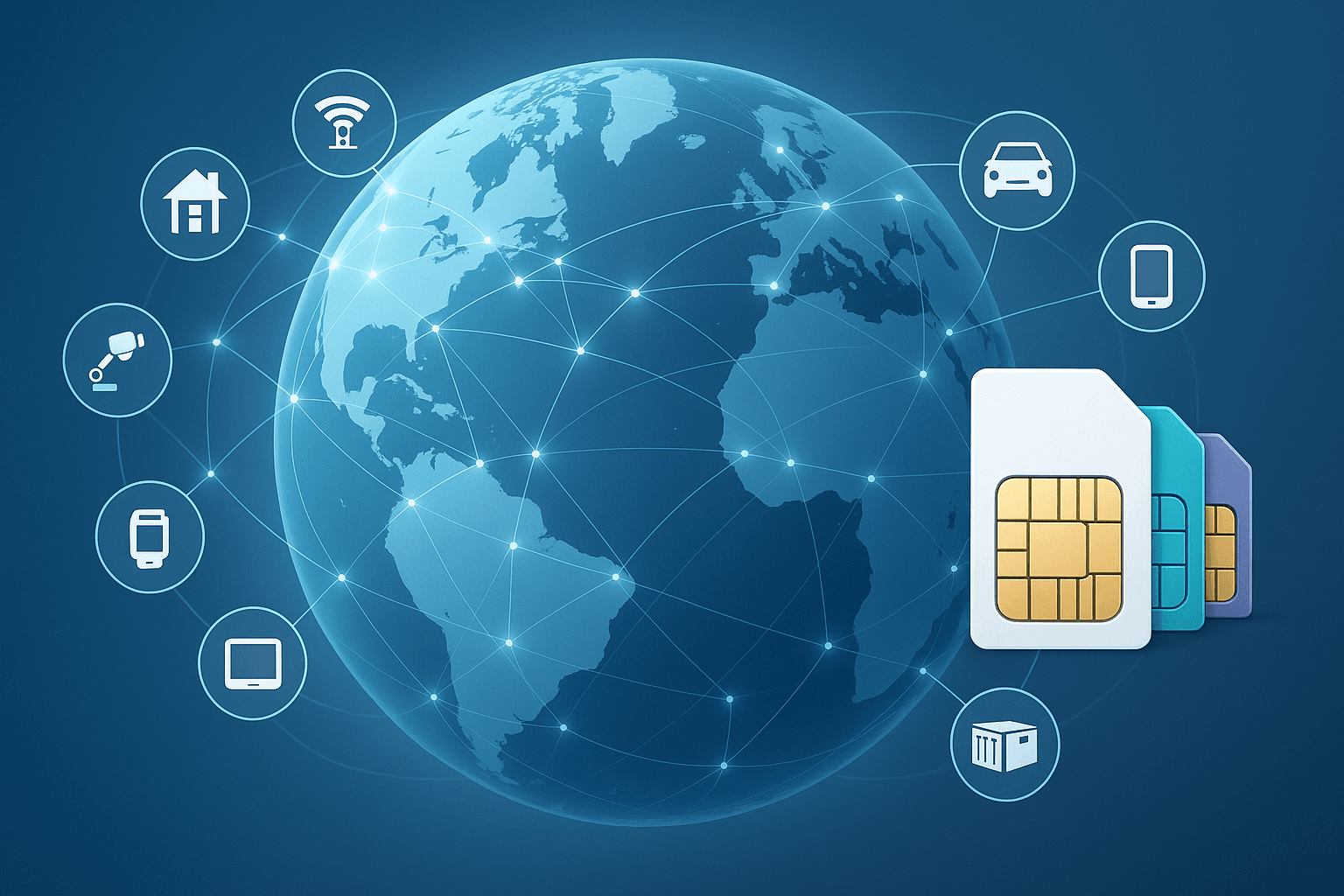
IoT connectivity should be a growth enabler—not a long-term constraint. Yet many deployments are locked into a single carrier decision made years earlier, limiting flexibility, scalability, and cost control. The ability to buy, bring, or blend connectivity profiles is changing that dynamic and giving enterprises far greater control over their IoT future.
The Problem with One-Time Connectivity Decisions
In traditional IoT deployments, connectivity is selected once at rollout:
- A single mobile network operator (MNO) is chosen
- SIM cards are provisioned
- Devices are manufactured and deployed
- Contracts are signed for years
At first, everything works. But as deployments scale across provinces, countries, or continents, challenges surface.
Coverage gaps emerge. Roaming costs rise. Regulatory rules change (especially in regions requiring permanent local profiles). What once seemed like a simple connectivity decision becomes a structural limitation.
According to GSMA, global IoT connections are expected to exceed 29 billion by 2030. As deployments grow larger and more geographically distributed, rigid connectivity models simply can’t keep pace.
What “Buy, Bring or Blend” Really Means
The shift toward flexible connectivity models gives enterprises three strategic options:
Buy
Purchase connectivity directly from a provider that supplies pre-configured global or regional profiles. This is ideal for rapid deployment when simplicity and speed matter most.
Bring
Use your existing carrier agreements and integrate them into a broader IoT management platform. Enterprises with established telecom contracts often prefer this approach.
Blend
Combine multiple profiles—global, regional, and local—within a single deployment. Devices can switch profiles based on geography, performance, or cost requirements.
This blended model is particularly powerful for multinational fleets, smart city infrastructure, and industrial IoT applications operating across borders.
Why Flexibility Matters More Than Ever
IoT deployments today are rarely static. Consider these real-world scenarios:
- A smart agriculture company expands from Canada into the U.S. and Latin America.
- A fleet management provider scales from 5,000 to 50,000 vehicles across multiple carriers.
- An OEM ships connected equipment globally, but must comply with local telecom regulations in Brazil or India.
Without profile flexibility, each expansion creates operational friction.
With a buy, bring, or blend strategy, organizations can:
- Optimize connectivity costs region by region
- Improve redundancy and uptime
- Avoid permanent roaming restrictions
- Reduce dependency on a single carrier
- Future-proof device lifecycles that may last 10–15 years
For industrial IoT deployments—where downtime can cost thousands of dollars per hour—connectivity resilience is not optional.
Enabling Profile Flexibility in Practice
Flexibility is only valuable if it’s manageable.
Modern IoT SIM technology, including multi-IMSI and eUICC (eSIM), allows remote provisioning of carrier profiles. This makes it possible to switch networks over the air—without physically replacing SIM cards.
At IoTKinect, our multi-provider IoT SIM solutions are designed with this flexibility in mind. Customers can:
- Access multiple carrier profiles
- Dynamically optimize network selection
- Maintain centralized visibility across deployments
For low-power, wide-area deployments, LoRaWAN offers another layer of flexibility. By decoupling connectivity from traditional cellular models, organizations can deploy private or public LoRaWAN networks tailored to coverage and cost requirements.
And when paired with intelligent edge platforms like EdgeKinect Core, businesses can manage data processing locally—reducing backhaul costs and dependency on constant cellular uptime.
The Strategic Impact on Industrial IoT
Industrial IoT (IIoT) environments—manufacturing plants, energy sites, utilities, logistics hubs—often operate in complex connectivity environments:
- Remote or rural locations
- Multi-country operations
- Long device lifespans
- Strict uptime requirements
A blended connectivity strategy reduces risk across all four dimensions.
For example, a mining operation in Northern Canada might use:
- LoRaWAN for on-site sensor networks
- Cellular IoT SIMs for backhaul
- Regional carrier profiles for cross-border asset tracking
With a centralized management layer, operators can monitor, adjust, and optimize profiles without redeploying hardware.
When combined with AI-driven platforms like EdgeKinect Vision, which process video and sensor data at the edge, organizations gain not just connectivity resilience—but operational intelligence.
Connectivity as a Competitive Advantage
The ability to buy, bring, or blend connectivity profiles represents more than technical flexibility—it’s a strategic shift.
Enterprises are moving from static telecom contracts to programmable connectivity ecosystems. Instead of adapting their operations to network limitations, they design connectivity around business objectives.
As IoT deployments continue to scale globally, the winners will be organizations that treat connectivity as a dynamic asset—not a fixed utility.
Flexibility today means scalability tomorrow.