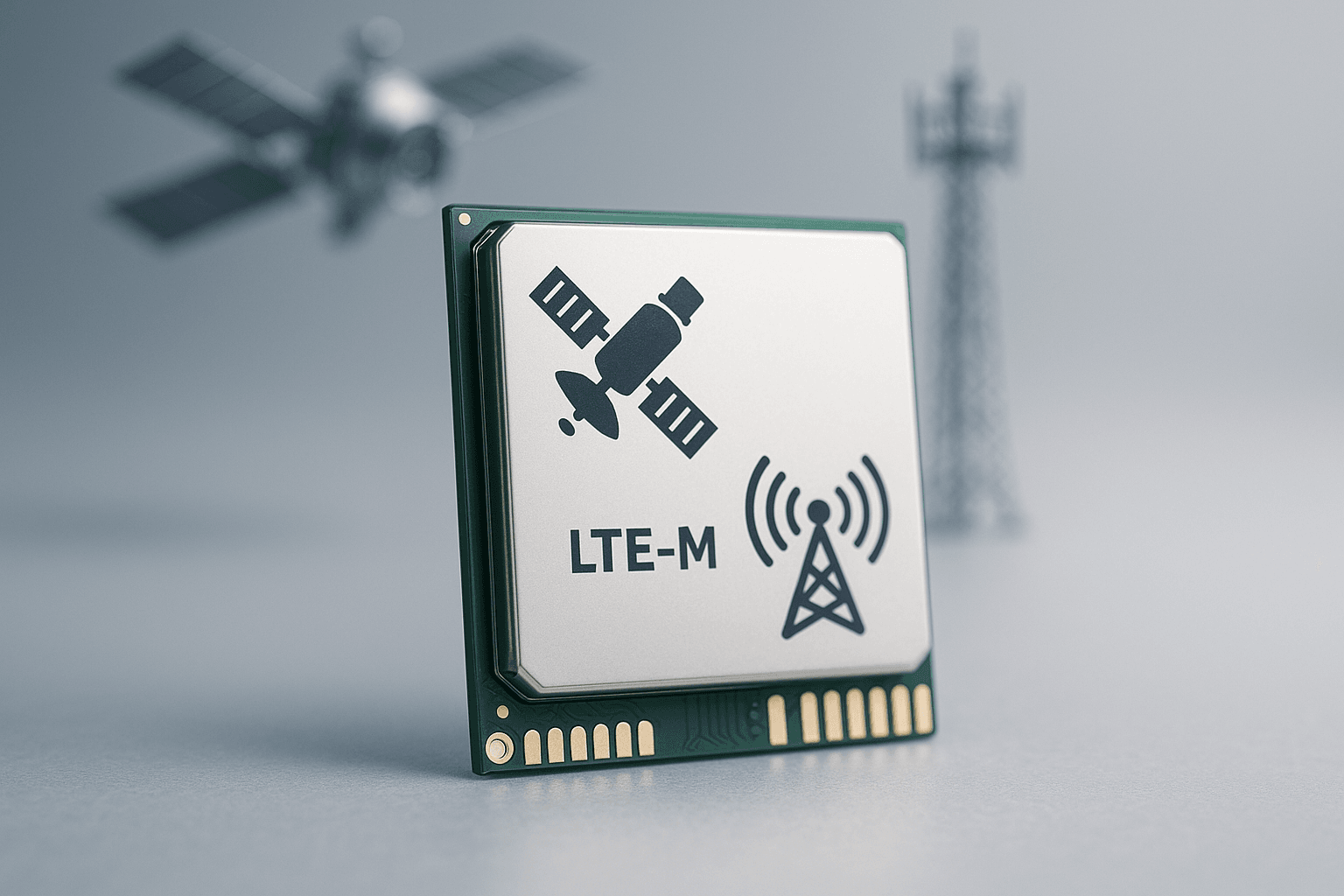
Global IoT connectivity is entering a new phase—where satellite and cellular are no longer competing, but converging. Iridium’s latest 9604 module reflects a growing industry shift toward hybrid communication platforms that simplify design while expanding coverage. For organizations deploying IoT at scale, this evolution could significantly reduce complexity and unlock new use cases.
Why Hybrid Connectivity Matters Now
The IoT market is projected to surpass 30 billion connected devices globally by 2030, with a growing share operating outside traditional urban coverage zones. From mining operations in Northern Canada to maritime logistics in the Pacific, reliable connectivity has long been a limiting factor.
Historically, businesses faced a choice:
- Cellular (LTE-M/NB-IoT): Cost-effective, high bandwidth—but dependent on terrestrial coverage.
- Satellite: Truly global—but often higher cost and more complex to integrate.
By integrating satellite, LTE-M cellular, and GNSS into a single compact module, the hybrid approach reduces hardware complexity while enabling seamless fallback between networks. This is particularly valuable for mission-critical applications such as remote monitoring, fleet management, and environmental sensing.
Design Simplification = Faster Time to Market
One of the biggest barriers to IoT scalability is engineering overhead. Managing multiple radios, antennas, certifications, and firmware stacks can delay deployments by months.
A unified platform offers several advantages:
- Single hardware footprint instead of multiple communication modules
- Simplified certification and compliance workflows
- Reduced power consumption through optimized radio management
- Lower bill-of-material (BOM) costs
For OEMs building industrial equipment, agriculture sensors, or tracking devices, this consolidation can dramatically shorten development cycles. Instead of designing separate SKUs for different regions, manufacturers can standardize around one globally capable module.
Real-World Applications: Where Hybrid IoT Shines
Hybrid satellite-cellular connectivity is particularly impactful in industries where coverage gaps are common.
1. Remote Asset Tracking
Heavy equipment, shipping containers, and rail assets often move in and out of cellular range. A dual-mode device ensures uninterrupted telemetry and location updates.
2. Energy & Utilities
Oil wells, wind turbines, and substations frequently sit in rural or offshore environments. Satellite fallback prevents costly blind spots in monitoring systems.
3. Environmental Monitoring
Wildfire detection, flood sensors, and climate research stations require consistent data transmission regardless of geography.
At IoTKinect, we see increasing demand for hybrid strategies—combining LoRaWAN for local, low-power sensing, multi-provider IoT SIMs for cellular resilience, and satellite connectivity for true global redundancy.
The Role of Multi-Network Strategies in Industrial IoT
While integrated modules simplify device design, network architecture still matters. A robust deployment often layers technologies:
- LoRaWAN for ultra-low-power, long-range local coverage
- Multi-carrier IoT SIM cards for reliable LTE-M/NB-IoT across regions
- Satellite connectivity for failover and remote geographies
- Edge computing to reduce bandwidth usage and latency
IoTKinect’s EdgeKinect Core platform enables secure edge processing and device orchestration across these mixed networks, while EdgeKinect Vision supports bandwidth-intensive applications like remote video analytics—where hybrid backhaul strategies can optimize cost and reliability.
The future isn’t about choosing one network—it’s about intelligently combining them.
What This Means for IoT Decision Makers
Hybrid modules like Iridium’s latest release signal a broader industry trend: connectivity is becoming more modular, resilient, and globally scalable.
For enterprises planning multi-year IoT investments, key considerations should include:
- Total lifecycle cost—not just hardware pricing
- Geographic scalability across multiple countries
- Redundancy for mission-critical data
- Integration with edge computing platforms
As connectivity options evolve, the real competitive advantage lies in designing flexible architectures that adapt to network conditions without redesigning hardware.