

Vape Detection — Schools
Vape, tamper and heat events in realtime.
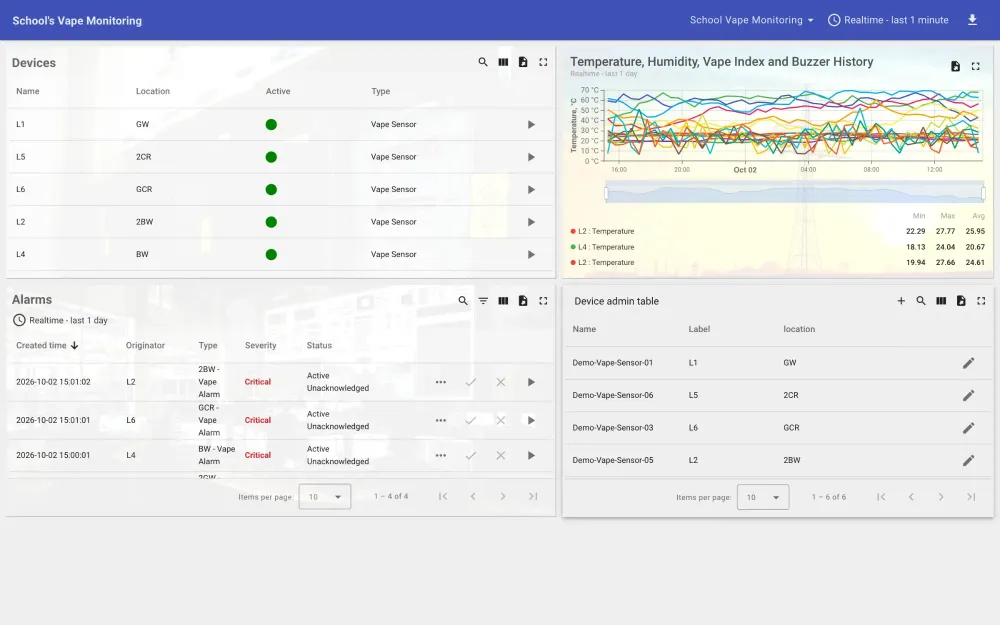
Embedded from preview.edgekinect.com. Anonymous, read-only public view. Some widgets may show “no data” while their source devices are idle.
Best on a larger screen — open in a new tabWhat’s in this view
Vape, tamper and heat events in realtime.
Anti-vaping dashboard for K-12 and post-secondary campuses. Discreet ceiling-mounted LoRaWAN sensors continuously sample for vape aerosols, flag tamper attempts and heat anomalies, and surface every incident with location and timestamp — without audio or video recording.
01
Vape alerts
02
Tamper & heat anomaly
03
Bathroom, classroom, stairwell coverage
04
Incident timeline & device health
FAQ
Questions about this dashboard
What the Vape Detection — Schools demo shows, and how it maps to a real deployment.
Discreet ceiling-mounted sensors continuously measure particulate matter (PM1.0, PM2.5, PM10), total volatile organic compounds (TVOC), temperature and humidity. The signatures left behind by e-cigarette aerosols produce a distinctive pattern across those readings; a vape index (0–100) combines them into a single threshold that fires the dashboard alert with the room and timestamp.
Keep exploring
More live dashboards.
Every demo is a working EdgeKinect Vision deployment with public, read-only access.
Talk to us
Want this dashboard on your own sensors?
Tell us what you monitor and where. We’ll scope the sensors, the connectivity and the dashboard with you.
- Sales
- (778) 900-5895
- [email protected]
- Hours
- Mon–Fri, 08:30 AM – 04:30 PM PST