

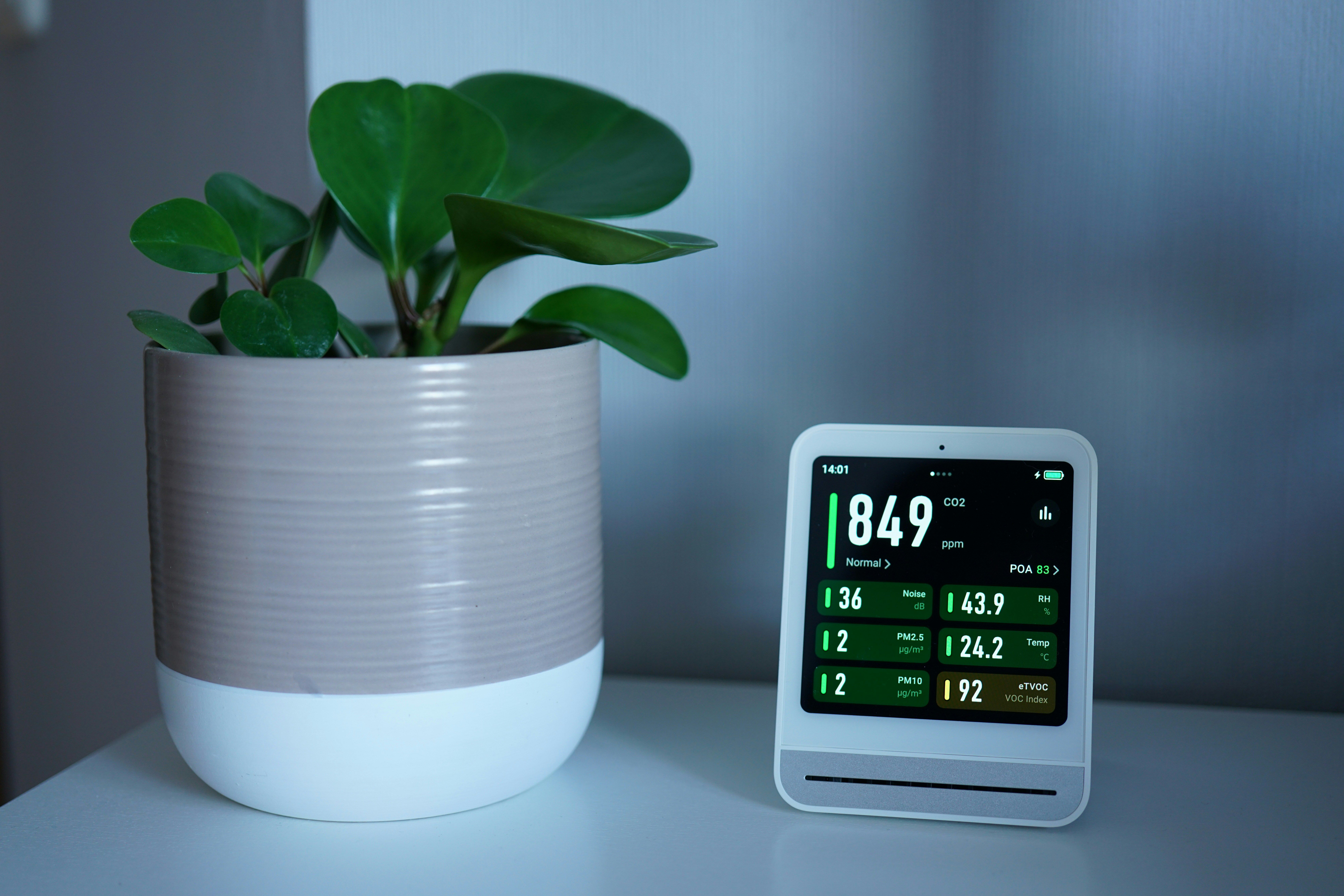
The air inside your building matters more than ever
People spend 90% of their time indoors. The quality of that indoor air directly impacts health, cognitive performance, and productivity.
After COVID-19, building occupants expect transparency about the air they breathe. Smart building managers are responding with continuous IAQ monitoring.
What to Measure
Effective indoor air quality monitoring tracks several key parameters:
CO2 (Carbon Dioxide)
Why it matters: CO2 is the best indicator of ventilation effectiveness. High CO2 means stale air and inadequate fresh air exchange.
Target levels:
- Outdoor air: ~420 ppm
- Good indoor: <800 ppm
- Acceptable: 800-1000 ppm
- Poor: >1000 ppm
- Unacceptable: >1500 ppm
Impact: Studies show cognitive performance drops 15-50% as CO2 rises from 600 to 1400 ppm.
PM2.5 (Fine Particulate Matter)
Why it matters: Tiny particles that penetrate deep into lungs. Sources include outdoor pollution, cooking, printers, and cleaning activities.
Target levels:
- Excellent: <12 μg/m³
- Good: 12-35 μg/m³
- Moderate: 35-55 μg/m³
- Unhealthy: >55 μg/m³
Impact: Long-term exposure linked to respiratory and cardiovascular disease. Short-term exposure causes irritation and reduced performance.
VOCs (Volatile Organic Compounds)
Why it matters: Off-gassing from furniture, cleaning products, paints, and building materials. Many are irritants or carcinogens.
Target levels:
- Excellent: <0.2 mg/m³
- Good: 0.2-0.5 mg/m³
- Moderate: 0.5-1.0 mg/m³
- Poor: >1.0 mg/m³
Impact: Causes "sick building syndrome" symptoms — headaches, fatigue, eye irritation.
Temperature and Humidity
Why it matters: Comfort affects productivity. Humidity extremes promote mold (high) or viral transmission (low).
Target levels:
- Temperature: 20-24°C (68-75°F)
- Humidity: 40-60% RH
Impact: Every degree outside comfort range reduces productivity by approximately 2%.
The Business Case for IAQ Monitoring
Productivity Gains
Harvard research found that employees in well-ventilated buildings with low CO2 and VOCs scored:
- 61% higher on cognitive function tests
- Significantly fewer sick days
- Higher reported job satisfaction
For a 100-person office, even a 5% productivity improvement represents tens of thousands in annual value.
Health and Liability
Buildings with documented IAQ monitoring and response procedures:
- Reduce liability exposure for air quality complaints
- Demonstrate duty of care to occupants
- Meet increasing regulatory requirements
- Support occupant health and wellness programs
Tenant Attraction and Retention
In competitive real estate markets:
- IAQ transparency differentiates properties
- WELL and Fitwel certifications increasingly valued
- Corporate tenants prioritize healthy buildings
- Premium rents justified by demonstrated quality
Implementation Approach
Sensor Placement
Typical density: One sensor per 2,000-5,000 sq ft, or per distinct zone
Priority locations:
- Conference rooms (high occupancy variation)
- Open office areas
- Reception and common spaces
- Near HVAC supply and return
- Areas with known air quality concerns
Data Interpretation
Effective IAQ programs require:
- Baselines: Understand normal patterns before reacting
- Context: Correlate with occupancy, weather, activities
- Trends: Track improvement or degradation over time
- Comparisons: Benchmark across zones and buildings
Response Procedures
Monitoring without response is useless. Define actions for:
- CO2 spikes: Increase ventilation, check dampers
- PM2.5 elevation: Check filters, identify sources
- VOC events: Identify source, increase ventilation
- Humidity extremes: Adjust humidification/dehumidification
Technology Options
Sensor Types
Basic: CO2, temperature, humidity
- Cost: $100-300 per sensor
- Use case: General ventilation monitoring
Advanced: Add PM2.5, VOCs, formaldehyde
- Cost: $300-800 per sensor
- Use case: Comprehensive IAQ programs
Premium: Laboratory-grade accuracy, additional pollutants
- Cost: $1,000+ per sensor
- Use case: Critical environments, research
Connectivity
- WiFi: Easy deployment where infrastructure exists
- LoRaWAN: Battery-powered, long range, low maintenance
- Cellular: Remote locations without network access
Display Options
- Dashboard only: For facility managers
- Public displays: Lobby screens showing real-time IAQ
- Occupant apps: Personal access to zone IAQ data
Getting Started
- Start small: Deploy sensors in 3-5 representative zones
- Establish baselines: Collect 2-4 weeks of data before drawing conclusions
- Correlate with HVAC: Understand how ventilation affects readings
- Define thresholds: Set alerts for actionable conditions
- Communicate: Share appropriate data with occupants
- Expand: Scale to full building coverage based on learnings
Breathe Easy
Our indoor air quality monitoring solutions provide the visibility and insights you need to maintain healthy, productive indoor environments.