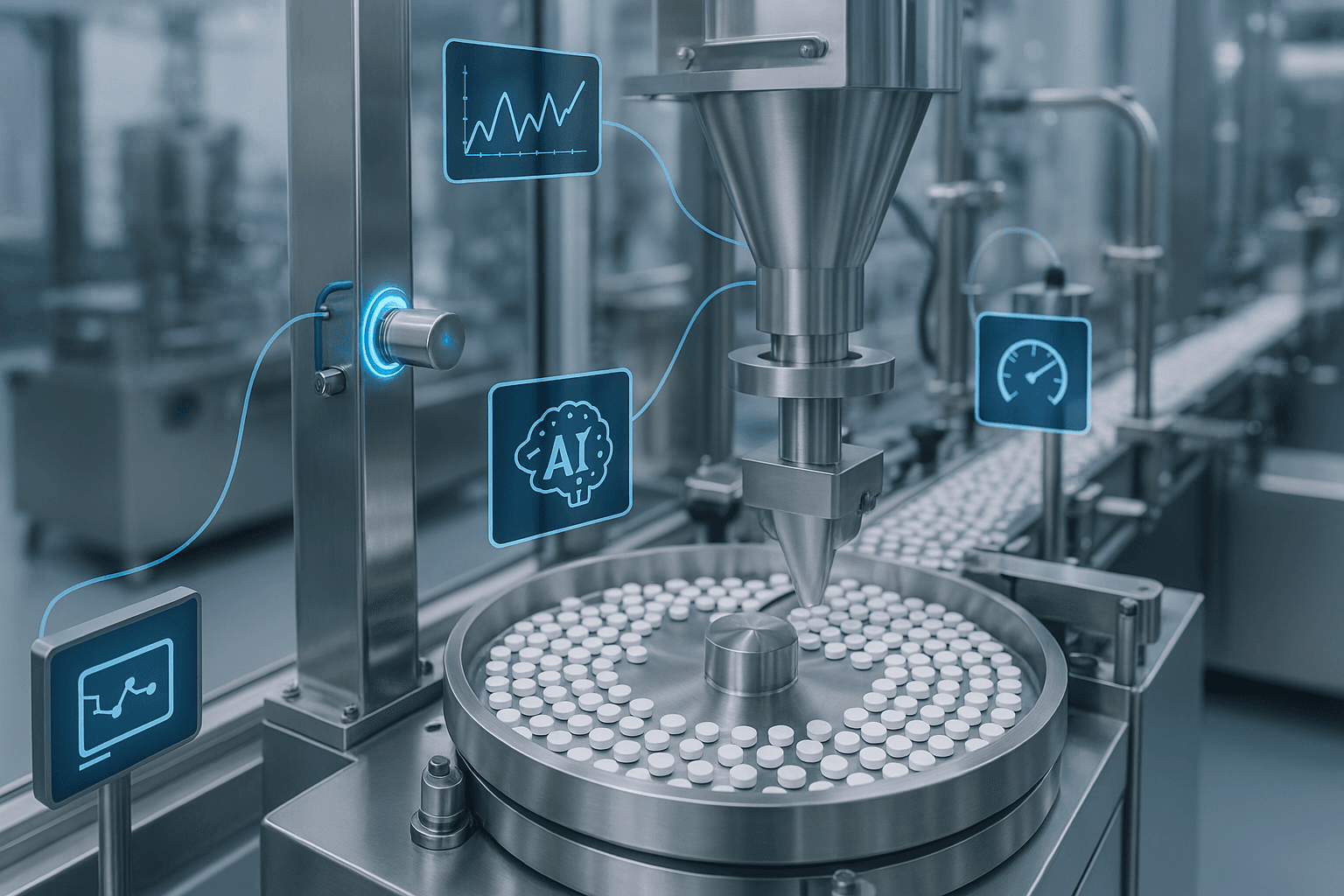
Pharma manufacturing is moving beyond paperless compliance toward predictive, intelligent operations powered by AIoT. What began as a push for digital documentation is now evolving into real-time process optimization, predictive quality control, and data-driven regulatory confidence. Across the industry, manufacturers are realizing that connectivity plus intelligence is the foundation of next-generation production.
Digitalization Is No Longer Enough
For years, pharmaceutical companies focused on eliminating paper batch records and digitizing workflows. While this reduced manual errors and improved audit readiness, it only scratched the surface of what digital transformation can achieve.
Today, regulators increasingly associate advanced manufacturing with:
- Stronger process control and traceability
- Continuous monitoring of critical quality attributes (CQAs)
- Faster deviation detection and resolution
- Data integrity aligned with FDA and EMA expectations
According to industry reports, pharmaceutical manufacturers lose up to 20% of production time annually due to unplanned downtime and process inefficiencies. Simply going paperless does not address this. AI-driven insights do.
Enter AIoT: Connecting Data to Decisions
Artificial Intelligence of Things (AIoT) combines connected sensors, edge computing, and machine learning to turn raw operational data into actionable intelligence.
In practical terms, this means:
- Real-time equipment monitoring to detect anomalies before failure occurs
- Predictive maintenance models that reduce downtime
- Automated quality checks through machine vision
- Process optimization algorithms that continuously refine production parameters
For example, AI-powered monitoring of temperature and humidity in sterile environments can predict contamination risks before they escalate. Instead of reacting to deviations after a batch fails, manufacturers can intervene proactively—saving time, materials, and compliance headaches.
At IoTKinect, our EdgeKinect Core platform enables secure edge data collection from production lines, while LoRaWAN networks provide reliable, low-power connectivity across large facilities. The result is continuous visibility without overloading central IT systems.
From Reactive Compliance to Predictive Quality
One of the biggest shifts in pharma is the transition from reactive quality control to predictive quality assurance.
Traditional model:
- Sample testing after production
- Batch rejection if results fall outside limits
- Investigations and documentation afterward
AIoT-enabled model:
- Continuous in-line monitoring
- Early anomaly detection
- Real-time process adjustments
This aligns closely with the FDA’s Process Analytical Technology (PAT) framework and Quality by Design (QbD) principles. Instead of treating compliance as documentation-heavy oversight, AIoT embeds quality directly into the process.
Machine vision platforms like EdgeKinect Vision can inspect packaging integrity, label accuracy, and fill levels at high speeds—often detecting micro-defects invisible to human inspectors. In high-volume production, even a 1% reduction in defects can represent millions in savings annually.
Securing Data Across Global Operations
Pharma manufacturing is global. Production lines, contract manufacturing organizations (CMOs), and distribution centers span multiple regions. Reliable, secure connectivity is critical.
Multi-provider IoT SIMs ensure:
- Redundant carrier access for uninterrupted connectivity
- Secure encrypted data transmission
- Seamless deployment across borders
Combined with private LoRaWAN networks inside facilities, manufacturers gain full-stack visibility—from environmental monitoring in cleanrooms to cold-chain tracking in transit.
The ability to monitor conditions continuously is especially critical for biologics and temperature-sensitive therapies, where even brief deviations can compromise product integrity.
The Competitive Edge of Predictive Manufacturing
AIoT is not just about efficiency—it is about resilience and competitiveness.
Pharmaceutical companies that adopt predictive manufacturing can expect:
- Reduced batch failures
- Lower maintenance costs
- Shorter production cycles
- Improved audit readiness
- Stronger supply chain transparency
As regulatory expectations rise and global demand for advanced therapies grows, manufacturers must operate with greater agility and precision. AIoT provides the digital nervous system that makes this possible.
The shift from paperless to predictive is more than a technology upgrade—it is a transformation in how pharmaceutical manufacturing thinks about risk, quality, and performance.
Ready to Modernize Your Pharma Operations?
AIoT can help you move from reactive compliance to predictive excellence. IoTKinect delivers secure connectivity, edge intelligence, and scalable industrial IoT solutions tailored for regulated environments.