
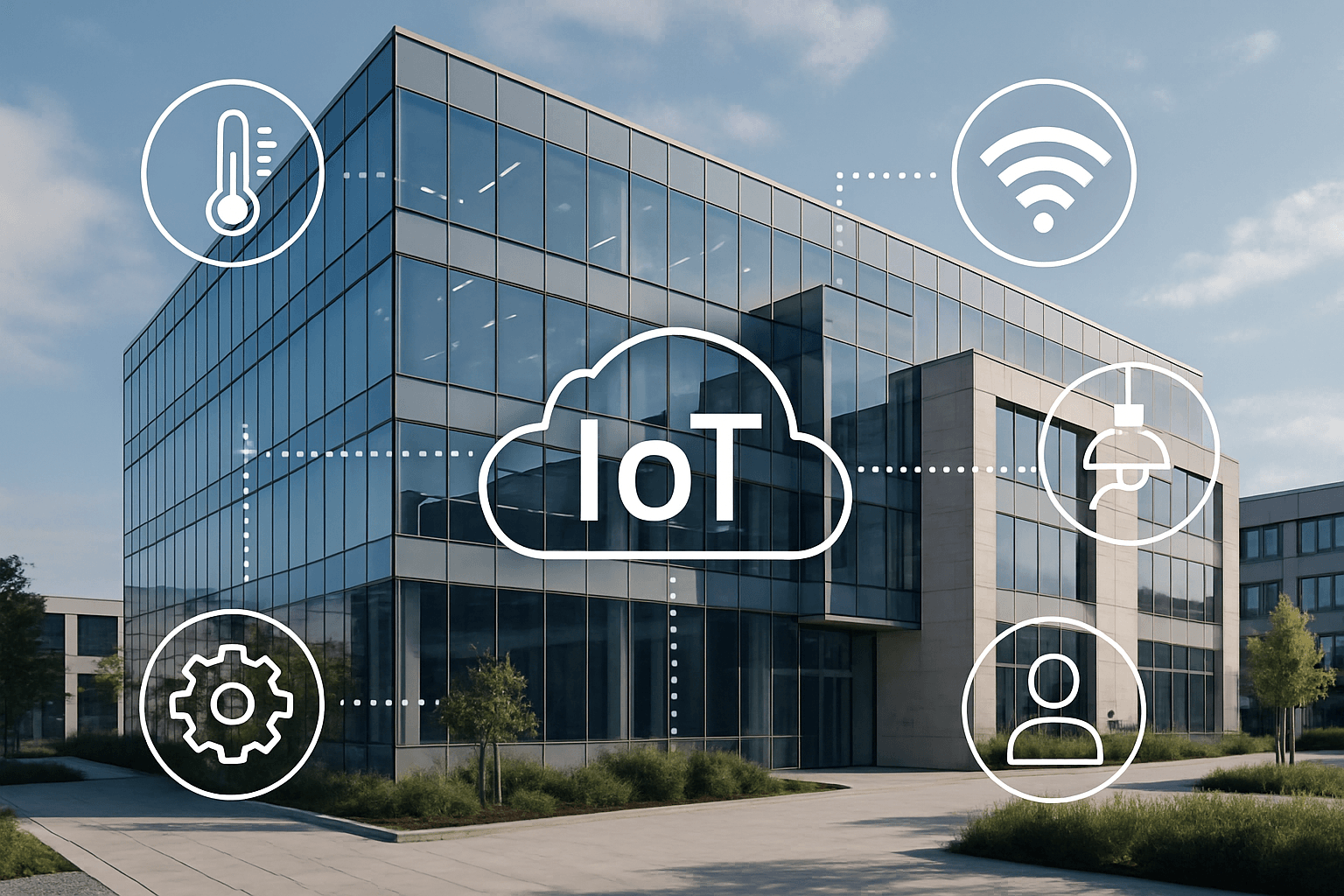
Smart buildings are no longer futuristic concepts—they’re becoming the operational backbone of modern infrastructure. By combining IoT sensors, connectivity, and intelligent automation, organizations are reducing energy costs, streamlining facility management, and creating healthier, more productive spaces. From commercial real estate to healthcare campuses and smart cities, connected infrastructure is transforming how buildings perform and how people experience them.
The Business Case for Energy Optimization
Energy accounts for nearly 30–40% of operating costs in commercial buildings, according to industry studies. With rising utility prices and sustainability mandates, optimizing consumption is both an environmental and financial priority.
IoT-enabled smart buildings leverage:
- Real-time energy monitoring across HVAC, lighting, and critical systems
- Occupancy-based controls to reduce waste in underutilized spaces
- Predictive analytics to identify inefficiencies before costs escalate
For example, connected HVAC systems can automatically adjust airflow and temperature based on occupancy patterns and weather data—reducing energy consumption by up to 20% in some deployments.
Using LoRaWAN-based sensors, facilities can monitor temperature, humidity, air quality, and equipment performance across large campuses with minimal power consumption and long battery life. This is particularly valuable in retrofitting older buildings where running new wiring is costly and disruptive.
Automation That Goes Beyond Convenience
Smart building automation isn’t just about turning lights off automatically—it’s about orchestrating entire ecosystems.
Integrated Building Management Systems (BMS) now connect:
- HVAC systems
- Lighting controls
- Access control and security
- Elevators and shared infrastructure
When combined with edge computing platforms like EdgeKinect Core, data processing can happen locally for faster decision-making and reduced cloud dependency. For example, if vibration sensors detect anomalies in a rooftop unit, the system can automatically trigger maintenance alerts before a failure disrupts tenants.
Automation also reduces manual workload for facility managers. Instead of reactive maintenance, teams shift to predictive and condition-based maintenance, lowering downtime and extending equipment lifespan.
Enhancing Occupant Comfort and Productivity
Smart buildings are designed not just for efficiency—but for people.
Research from the World Green Building Council shows that improved indoor air quality and thermal comfort can boost productivity by 8–11%. IoT sensors measuring CO₂ levels, temperature, humidity, and lighting conditions enable dynamic adjustments that enhance comfort in real time.
In corporate environments, this may mean:
- Personalized climate zones
- Smart meeting rooms that auto-configure settings
- Occupancy analytics for better space planning
In healthcare, it can mean maintaining strict environmental conditions in patient rooms, labs, and pharmaceutical storage areas—where deviations can have critical consequences.
For high-security or sensitive environments, EdgeKinect Vision adds intelligent video analytics to monitor occupancy flow, detect anomalies, and support safety compliance without overwhelming teams with manual surveillance tasks.
Smart Buildings in Smart Cities
At a broader scale, connected buildings play a vital role in smart city initiatives. When integrated with city-wide platforms, buildings can:
- Participate in demand-response energy programs
- Share anonymized environmental data
- Support EV charging infrastructure optimization
- Contribute to carbon reporting and ESG goals
Multi-provider IoT SIM connectivity ensures reliable communication across distributed assets—whether managing retail chains nationwide or municipal facilities across multiple regions. Resilient connectivity is essential when uptime directly impacts public services or tenant operations.
Turning Data Into Action
Data alone doesn’t create a smart building—actionable insights do.
The combination of LoRaWAN sensors, IoT SIM connectivity, edge computing, and centralized dashboards enables organizations to move from fragmented monitoring to unified intelligence. With scalable architectures, even legacy facilities can transition toward intelligent, automated ecosystems without full infrastructure overhauls.
As sustainability regulations tighten and tenant expectations rise, smart buildings will become the standard—not the exception. Organizations that invest now are positioning themselves for lower operating costs, higher asset value, and improved occupant satisfaction.