Blog

Satellite IoT: Extending Connectivity Beyond Terrestrial Limits

Satellite IoT and Non-Terrestrial Networks (NTN) are transforming global connectivity by reaching devices beyond cellular and fiber coverage. Discover how LEO constellations and 3GPP standards enable resilient IoT deployments in agriculture, logistics, energy, and remote operations.
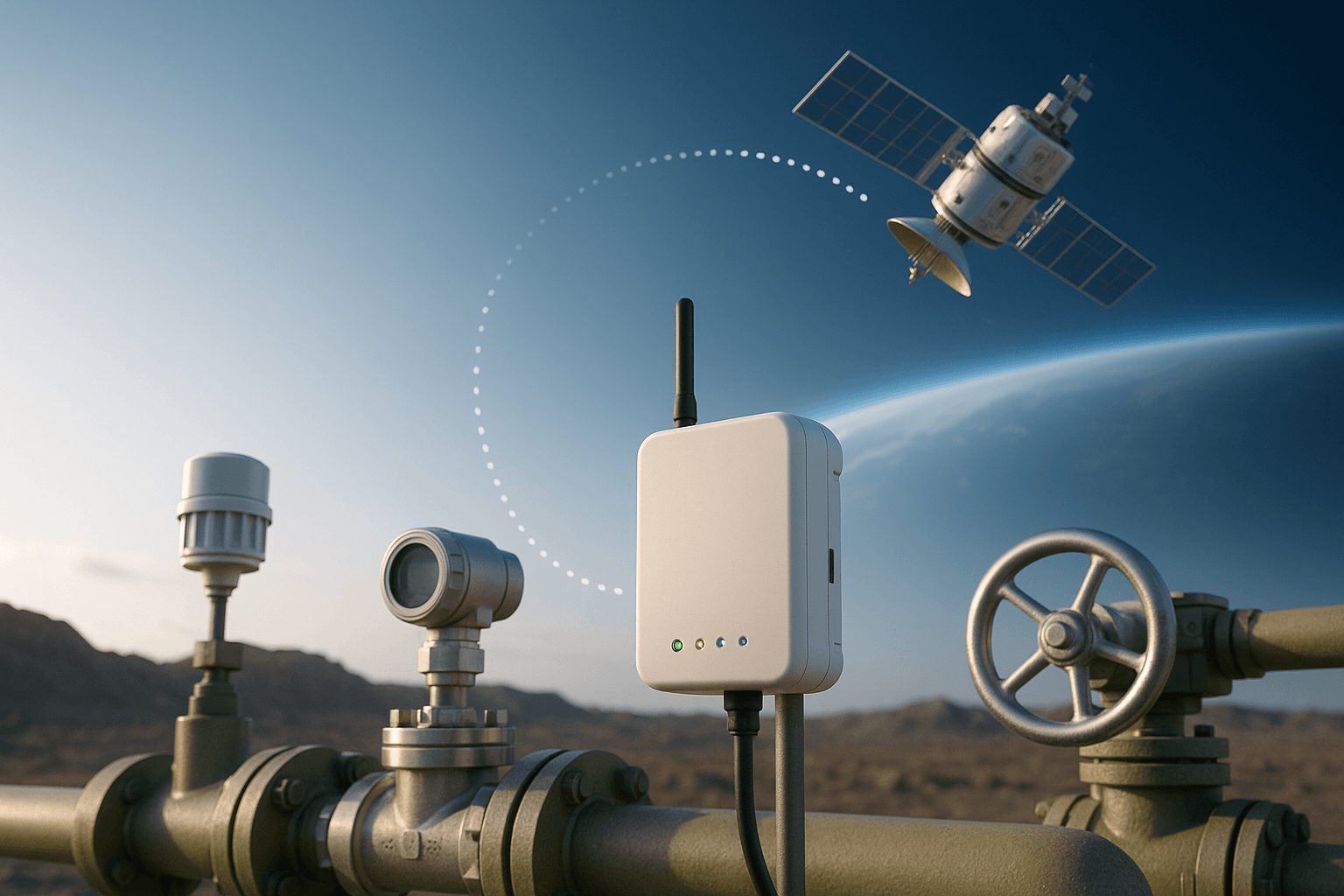
Satellite IoT device connecting remote industrial sensors to a low-earth orbit satellite network | AI-generated image
Published at

When your assets move beyond the reach of cell towers, your connectivity strategy must reach further. Satellite IoT and Non-Terrestrial Networks (NTN) are reshaping how organizations connect devices in remote, rural, and mobile environments. As Low-Earth Orbit (LEO) constellations expand and 3GPP standards mature, global IoT coverage is becoming more reliable and cost-effective than ever before.

What Is Satellite IoT and Why It Matters Now

Traditional IoT connectivity relies on terrestrial infrastructure—cellular towers, fiber backhaul, and LPWAN gateways. But vast regions of the world remain underserved. According to the GSMA, roughly 15% of the world’s landmass has no reliable cellular coverage, including oceans, deserts, forests, and remote industrial zones.

Satellite IoT bridges this gap by connecting devices directly to satellites instead of ground-based networks. Recent advances in:

  • Low-Earth Orbit (LEO) constellations (operating 500–2,000 km above Earth)
  • Reduced launch costs
  • 3GPP Release 17+ NTN standards

have significantly lowered latency and device costs, making satellite connectivity practical for mainstream IoT use cases.

For organizations managing distributed assets, this means continuous visibility—no matter where operations take place.

The Role of 3GPP and Hybrid Connectivity

One of the most important developments in Satellite IoT is the integration of NTN into 3GPP standards. Rather than relying on proprietary satellite protocols, devices can now support standardized NB-IoT and LTE-M over satellite.

Why this is important:

  1. It reduces hardware complexity.
  2. It enables multi-network roaming.
  3. It supports hybrid terrestrial-satellite fallback models.

In practical terms, a device can operate on cellular networks where available and seamlessly switch to satellite when coverage drops.

This hybrid model aligns closely with IoTKinect’s multi-provider IoT SIM strategy. Our global IoT SIM cards are designed to automatically select the strongest available network—terrestrial first, with satellite integration increasingly becoming part of future-ready deployments.

Real-World Applications Driving Growth

Satellite IoT is not theoretical—it’s already transforming key industries.

Agriculture and Environmental Monitoring

Remote farms often lack reliable cellular coverage. Satellite-connected soil sensors and weather stations enable:

  • Precision irrigation management
  • Livestock tracking across vast grazing areas
  • Wildfire detection in remote forests

The global smart agriculture market is projected to exceed $25 billion by 2028, with connectivity in rural zones as a major driver.

Logistics and Maritime Tracking

Shipping routes, rail corridors, and cross-border trucking frequently move through connectivity dead zones. Satellite IoT ensures:

  • Real-time asset tracking at sea
  • Cold chain temperature monitoring
  • Cargo security alerts in transit

For fleet operators, this reduces loss, improves compliance, and increases operational transparency.

Energy, Mining, and Utilities

Remote oil fields, wind farms, and mining operations demand resilient connectivity. Satellite IoT enables predictive maintenance and equipment monitoring where terrestrial infrastructure is unavailable or unreliable.

Paired with platforms like EdgeKinect Core, organizations can process critical telemetry locally at the edge while using satellite links for periodic data backhaul—optimizing bandwidth costs and operational efficiency.

Cost, Power, and Performance Considerations

Early satellite IoT solutions were expensive and power-hungry. That is rapidly changing.

Modern improvements include:

  • Lower device power consumption for multi-year battery life
  • Smaller antenna requirements
  • Narrowband satellite options for low-data applications
  • LEO latency improvements (often 20–50 ms range for certain services)

For many industrial applications, small data packets transmitted periodically are sufficient. This makes satellite IoT especially suitable for sensor-based monitoring rather than high-bandwidth video workloads.

For high-data use cases such as remote visual inspections, hybrid architectures are key. With EdgeKinect Vision, AI-driven processing can occur on-site, transmitting only actionable insights via satellite instead of raw video streams—dramatically reducing bandwidth demands.

Designing a Future-Ready IoT Architecture

The future of IoT connectivity isn’t terrestrial or satellite—it’s both.

Organizations building resilient deployments should consider:

  • Primary connectivity: LoRaWAN or cellular for cost-effective local coverage
  • Secondary/failover connectivity: Satellite for guaranteed uptime
  • Edge intelligence: Local processing to minimize backhaul costs
  • Multi-operator SIMs: For seamless roaming and redundancy

At IoTKinect, we help businesses architect layered connectivity strategies that combine LoRaWAN networks, multi-provider IoT SIM cards, and industrial edge platforms to ensure data flows securely and reliably—anywhere operations demand it.

Satellite IoT is no longer just a niche solution for extreme environments. It’s becoming a critical component of resilient, global IoT ecosystems.

Contact Us | Explore Solutions

More Blog Posts

Start Your IoT Journey

Ready to Transform Your Business?

Join hundreds of companies leveraging IoT to drive innovation and growth.