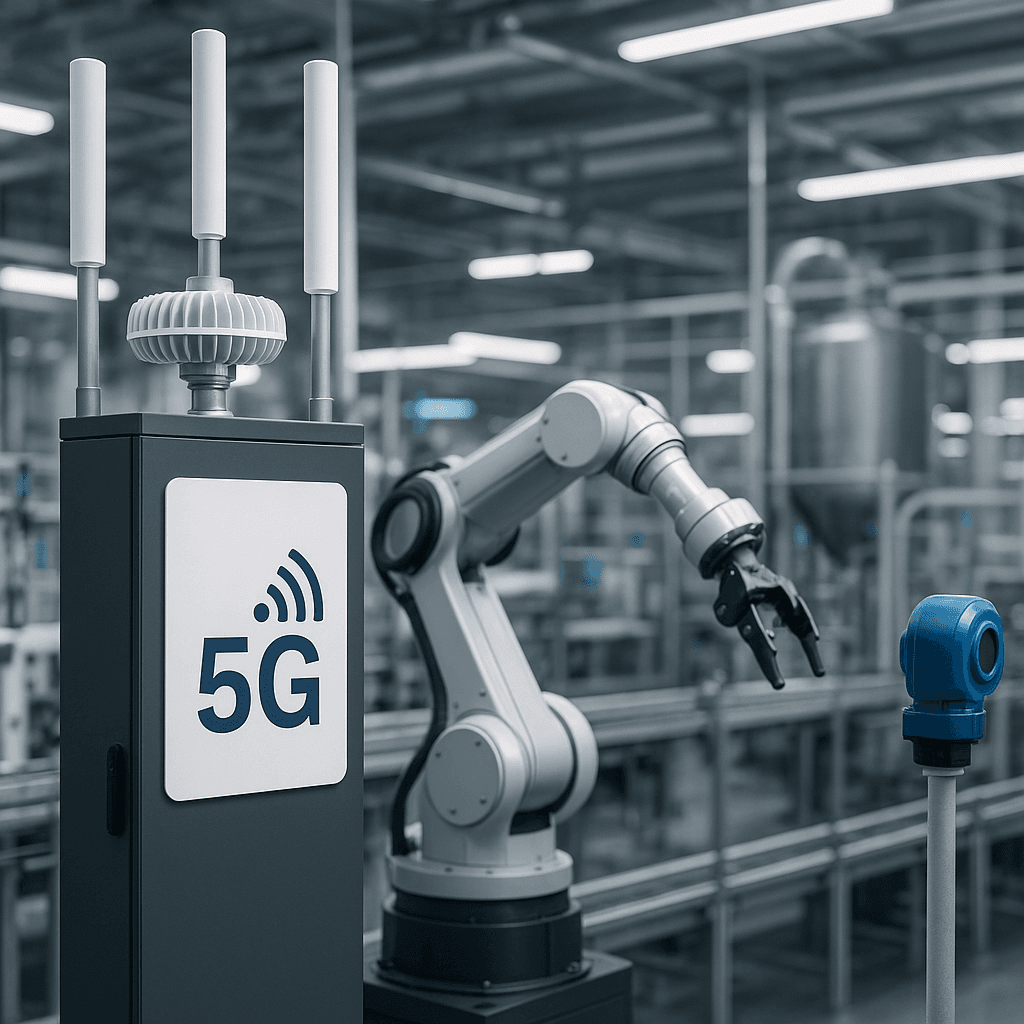
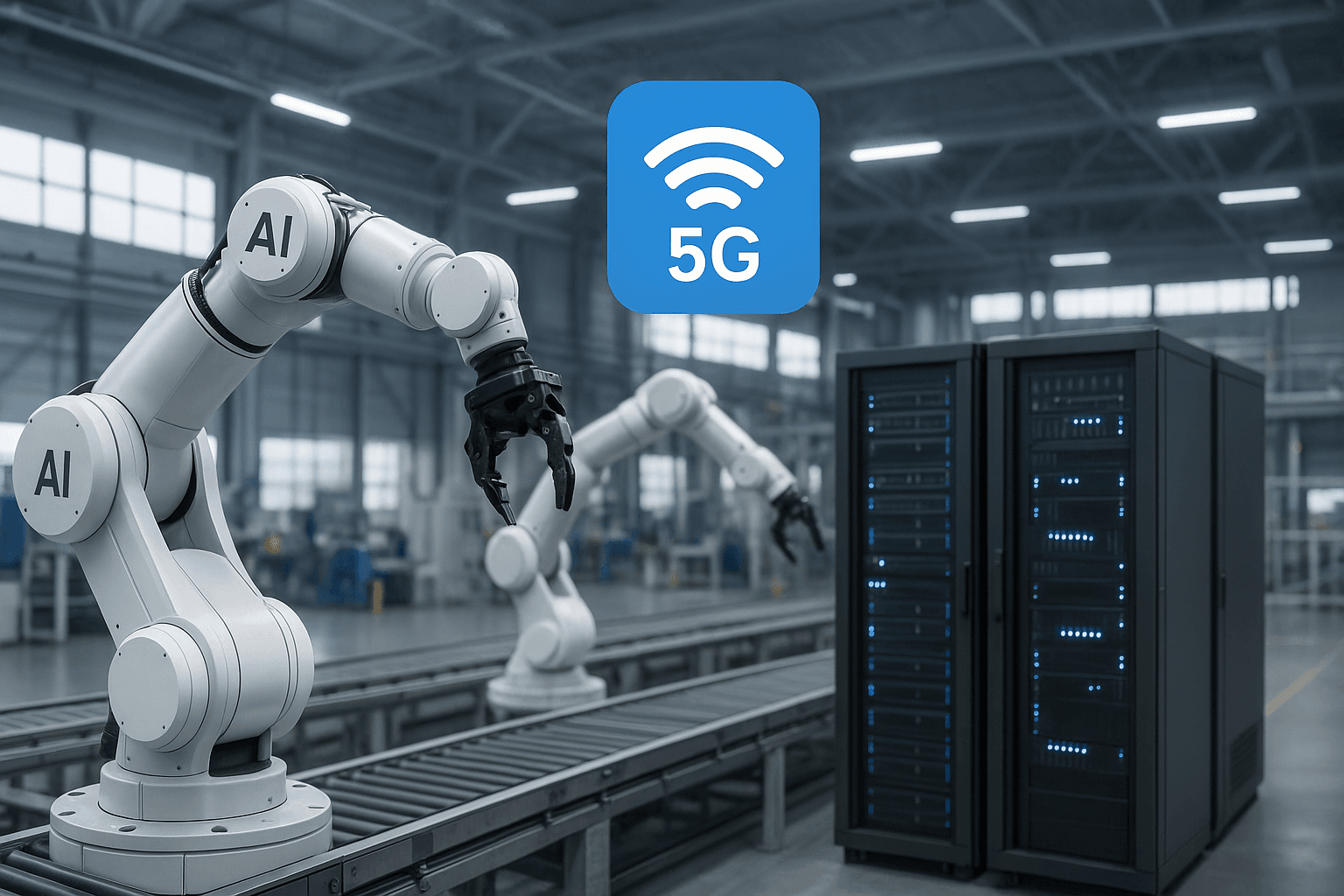
Private 5G is moving from pilot projects to mission-critical infrastructure. With annual spending forecast to surpass $6.6 billion by 2029, the technology is rapidly becoming a backbone for AI-powered industrial operations. As physical AI systems scale across factories, ports, and logistics hubs, enterprises are investing heavily in secure, high-performance private networks.
Why Private 5G Is Gaining Momentum
The projected $6.6 billion market size reflects more than incremental growth—it signals a structural shift in how industries approach connectivity.
Several forces are converging:
- Physical AI adoption – Robotics, autonomous vehicles, and AI-driven inspection systems require ultra-low latency and deterministic connectivity.
- Multi-site industrial rollouts – Large manufacturers are replicating smart factory blueprints across regions and continents.
- Data sovereignty and security requirements – Enterprises want full control over their networks and data flows.
- Spectrum availability – More countries are opening shared and enterprise spectrum bands for private use.
Unlike public cellular networks, private 5G allows organizations to optimize performance for specific workloads—such as machine vision analytics or time-sensitive automation.
The Rise of Physical AI in Industrial Environments
Physical AI—AI embedded into machines that interact with the physical world—is a key catalyst for private 5G growth.
Autonomous Mobile Robots (AMRs) in warehouses require seamless handoffs across facilities.
AI-powered quality inspection systems rely on high-throughput video streams for real-time defect detection.
Remote operations and digital twins demand reliable, high-bandwidth communication between edge systems and centralized platforms.
For example, automotive manufacturers deploying AI-enabled robotics across multiple plants need consistent network performance worldwide. Private 5G ensures predictable latency and secure data handling—especially when AI inference is distributed between edge and cloud systems.
At IoTKinect, we often see these workloads complemented by edge computing platforms like EdgeKinect Vision, which processes high-resolution video and sensor data locally before sending actionable insights upstream.
Multi-Site, Multi-National Deployments: The Real Growth Engine
The biggest investments are not single-site experiments—they’re standardized rollouts across dozens of facilities.
Enterprises are now:
- Designing repeatable private 5G architectures
- Integrating edge compute for localized AI processing
- Connecting legacy equipment alongside modern IoT devices
- Extending connectivity to remote or hard-to-wire environments
However, private 5G is rarely the only connectivity layer. Many organizations adopt a hybrid approach, combining:
- Private 5G for high-bandwidth, mission-critical operations
- LoRaWAN for low-power, long-range sensor networks
- Multi-provider IoT SIM cards for backup and wide-area redundancy
This layered strategy ensures both performance and resilience—especially in geographically distributed operations.
Where Private 5G Fits in the Broader IoT Ecosystem
While private 5G excels in high-performance use cases, not every application requires it.
- Environmental monitoring across large campuses? LoRaWAN offers cost-effective, long-range coverage.
- Asset tracking across borders? Global IoT SIMs provide seamless roaming.
- AI-powered machine vision and analytics at the edge? EdgeKinect Core and EdgeKinect Vision deliver localized processing with secure connectivity options.
The future isn’t about choosing one technology—it’s about architecting the right mix.
As AI systems become more autonomous and distributed, network infrastructure must support real-time decision-making, edge intelligence, and centralized oversight simultaneously.
Preparing for the Next Phase of Industrial Connectivity
With spending expected to exceed $6.6 billion annually by 2029, private 5G is entering a maturity phase. Early adopters are moving beyond proofs of concept toward standardized, scalable deployments that integrate AI, edge computing, and multi-layer connectivity.
Organizations planning digital transformation initiatives should evaluate:
- Latency and bandwidth requirements of AI workloads
- Data security and compliance obligations
- Multi-site deployment scalability
- Integration with existing IoT infrastructure
The companies that design connectivity with AI in mind today will be better positioned to scale tomorrow’s autonomous operations.